Working
agile
Preparing and holding a workshop about working agile at the University of Bamberg to prepare Informatics students for agile product development
Side Project
Workshop
Coaching
Agile
The University of Bamberg asked Ralph (who then asked me) to hold a workshop about agile working methods and product management for 6th semester BSc Informatics students. As part of their course students came up with their own ideas around the general theme “Smart City”. Their lecturer specifically asked them to apply agile methodology in their approach to the task and come up with a startup pitch at the end of the semester which would be graded by judges from Bamberg’s startup network.
In order to set the students up with the right theoretical background for this task we came up with an agenda that would provide them with an overview, teach principles of product management and agile and leave plenty of time to experiment with them. Ralph with his tremendous experience as an agile coach and consultant would introduce the students to agile principles, org structures and background info while I'd bring in the product perspective with strategy and hands on execution. I'll mostly write about the parts of the workshop I prepared while still giving you the full agenda - if you want the full thing you know whom to ask. :)
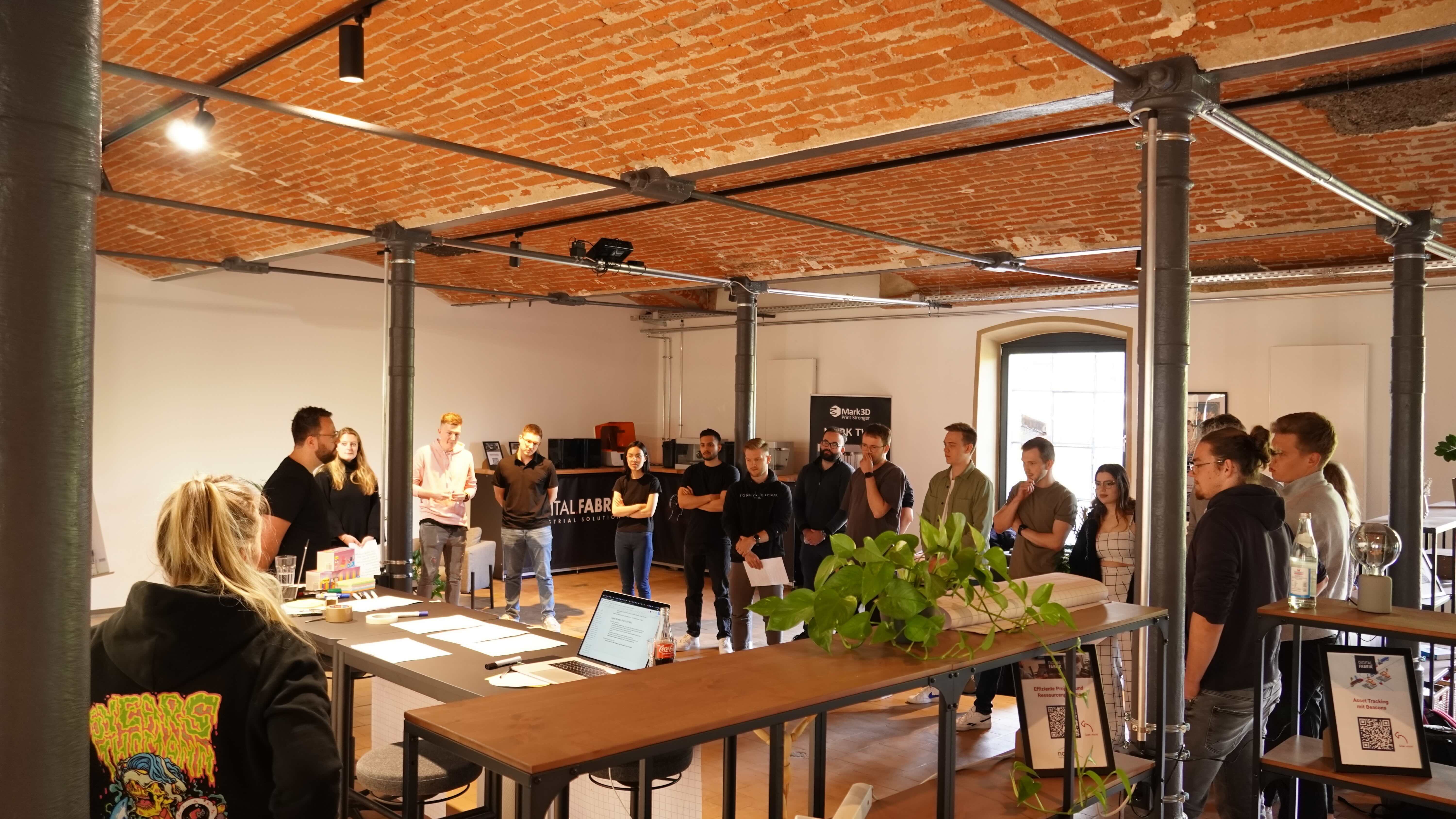
Introduction to Agile
No better way to start a Tuesday morning in July than receiving an introduction to agile. What are the origins, why do we apply the principles in software development and what's Ralph's and my experience with it? In other words: why you may want to pay attention.
The Product
Since our students already had a theme they needed to work with (Smart City) and some even came up with ideas we decided to put the product part first. We gave them the general idea of what a product can be in a digital context and asked them about the last product in their lives that wowed them. That way we concluded: a good product solves a problem or removes a pain point from the user's life, thus creating value for them. The easier to use the better - intuitiveness, consistency and reliability play a role here. An environmentally friendly product is more scalable and aesthetics in design can bring that little extra confetti to the user experience.
The Vision
I kicked this section off by explaining the benefits of having a product vision. In a nutshell: painting the picture of what the world looks like with your product in it and coming up with a concise description of what it changed for the better would provide the students with the essence to their pitch as well as with a strategic direction for all their development efforts. Having a vision helps with prioritising tasks and features - if you're following ICE (or RICE) you can translate the impact estimation to how strongly developing it supports you in reaching the product vision.
Since many student groups already had an idea of what they'd like to build and came straight out of a design thinking workshop from the previous day we worked backwards (not the Bryar and Carr way) towards the problems their ideas would solve. Providing them with examples of the visions for products and companies they knew and discussing how they provide a clear strategic direction helped them form their own visions which they then presented to the whole class.
Your Agile Org
Giving the students an overview of roles and responsibilities in an agile org would provide them with ways to distribute their work for the semester within their respective project group. After introducing them to common roles and responsibilities in agile organisations we demonstrated how we formed our organisation from that, painting the picture of who does what at Thomann and how we hold each other accountable.
We then had the students work in their project groups to come up with roles they'd need for the semester and present the results to the class so they'd have even more inspiration for their collaboration.
Agile Principles
Ralph and I both share the belief that you're not agile because you hire a certain role, work in sprints or write "agile" in your employer branding playbook. Any agile framework, org and methodology is based on the agile manifesto so we gave an overview before diving into details of execution with agile frameworks.
Agile Frameworks
We of course picked the two most popular ones to teach the students: Scrum and Kanban. Once they told us they were quite familiar with Scrum we shifted this part of the agenda towards how we pick elements of different agile frameworks for our own teams and spent some time discussing the Scrumban setup of one of the teams I was working with at the time.
Pulling the Stacey landscape out of our drawer of bonus content and explaining the difference between complicated and complex work we were able to give the class some orientation of when an agile framework makes sense versus which projects would be smoother to push through in a waterfall way.
Ending the Day
We left some time for questions and then wrapped up the workshop with a round of feedback from the students. Ralph and I sat down with a cool drink and recapped the workshop from our perspective while it was still fresh in our memories.
The coolest bit: we got to join the students' pitches at the end of the semester and saw them pitch the products they came up with to the jury!
Tipps, Tricks And Takeaways
I always like to have a parking lot ready during any meeting or workshop I moderate. That way if someone has an idea, a question or a topic that doesn't quite fit in the moment you can write it down and come back to it later. Maybe it fits under some other point of the agenda, maybe you vote to kick another point off of the agenda to make room for it or maybe you do a round of questions at the end of the session and circle back to it.
Asking for context before even coming up with an agenda is crucial. Try to find out as much as possible about what your attendees already know and try to build on that. The students in our workshop came straight out of a design thinking workshop so they had a fair sense of jobs-to-be-done, the purpose behind a product and how they should solve a user problem for their product to be successful.
If you're not entirely sure about the attendees' context keep a few options at hand so you can remodel the agenda on the go if you find them yawning at the 3rd introduction of the Scrum framework that month.
Taking pictures is always helpful if you're working with pen on paper. They provide documentation for you and your attendees and especially if you have people simultaneously working in groups they might capture details you were too busy to see in the moment.
Probably the most important bit: always ask for feedback. A general feeling whether attendees feel the workshop's goal was reached and whether it was a good investment of time for them before they leave. If they're open to it a summary of whether and how they applied what they learned afterwards.
Any
questions
?
Are you free for a casual chat?
What is your availability?
What kind of roles do you have experience in?
What's the last book you read?
Are you fully relocated to Australia?